


 ORIGINAL STUDY
Weightless Space
Deep House118 BPM
The last train has gone.
ORIGINAL SOUND STUDY / 03
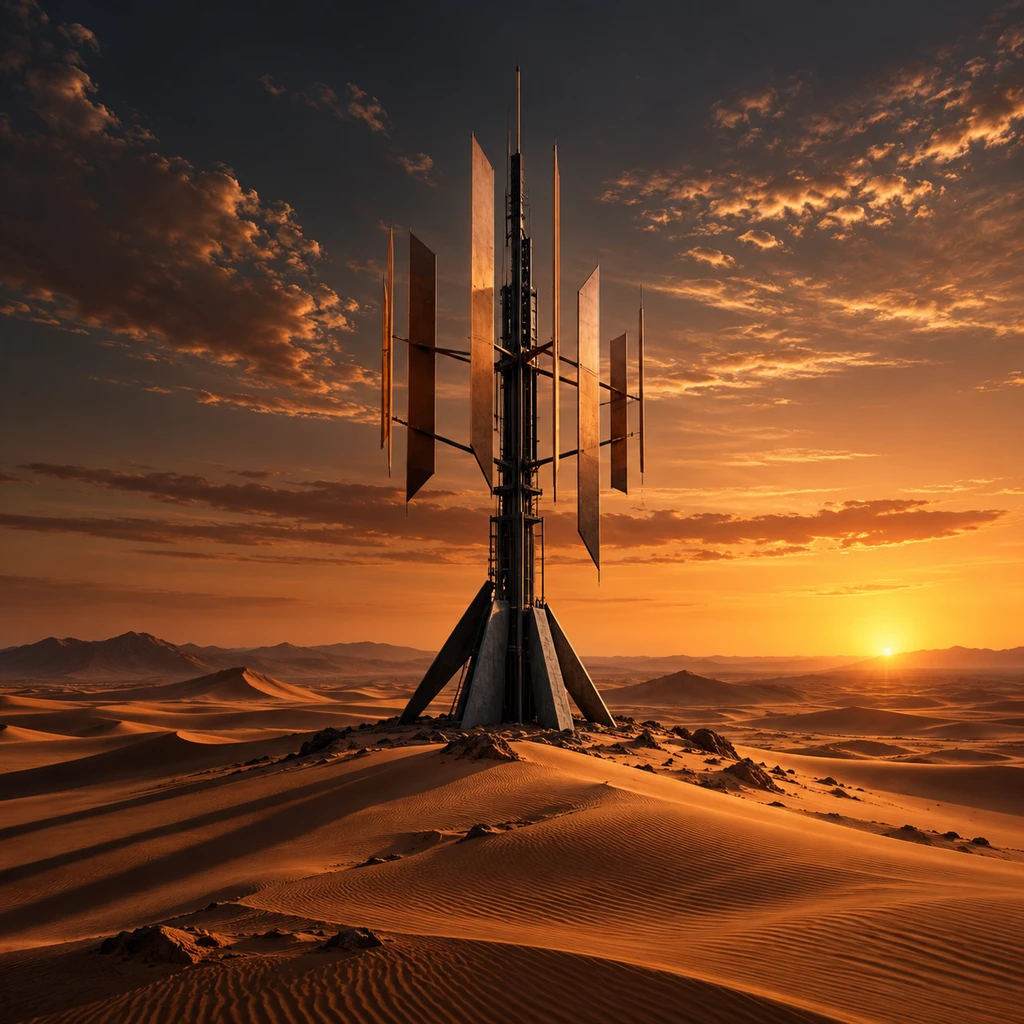
A signal arrives from beyond the dunes. Metallic patterns circle a distant horizon, while a steady kick keeps your feet on unfamiliar ground. Follow the transmission.
Original instrumental demo · Synthesized locally · No account needed
BEHIND THE FEELING
This sketch pairs a firm kick with an arpeggiated minor motif. Listen for the interaction of the repeated notes with a longer chord cycle. Harmonic movement can make a repetitive rhythm feel as though it is traveling somewhere.
Count four groups of eight beats. Imagine muting the lead for the first group and introducing it in the second. This simple exercise reveals why phrasing matters more than filling every moment with sound.
126 BPM · strong pulse · high atmosphere · repeating arpeggio. This short arrangement combines synthesized oscillators, shaped noise percussion and simple delay. It is an educational sketch, with a deliberately limited palette rather than a full commercial release.
Genre names here describe a listening direction. They are not claims about an established artist or an official remix. Every recording on 51ROUSI is an original procedural study; none samples a commercial song.
SCENE TO SESSION / BEGINNER PROJECT
Patient melodic motion · 126 BPM · E minor · One eight-bar DAW sketch
A fictional creative brief by 51ROUSI, edited by Shamu. The story is a production prompt; it is not a claim about a real event.
A radio mast stands beyond a line of dunes. Its tiny light blinks at a constant rate while the wind moves sand across the service road. You walk toward it, but the distance seems almost unchanged. Motion comes from the small things passing in the foreground.
Build a stable foundation and let a restrained surface pattern create travel. The blinking light is your recurring motif. The wind is a quiet texture whose movement should not compete with the pulse. This brief asks for persistence, not a dramatic festival drop. The listener should notice development after several repetitions without feeling that every layer has become louder.
A firm kick, short E/B bass, one E–G–B arpeggio and two percussion lanes. Limit the melodic idea to three pitches; let register or note length provide development.
This is a suggested remake, rather than a transcription of the 30-second study above. Use any DAW with a piano roll, a basic synth and stock effects. Save a duplicate before each experiment.
| Bars | Decision and purpose |
|---|---|
| 1–2 | Kick, bass and a sparse three-note motif establish the horizon. |
| 3–4 | Add quiet offbeat percussion; keep motif pitches fixed. |
| 5–6 | Open the motif filter slightly while holding its fader steady. |
| 7–8 | Remove one percussion lane, then return it on the next downbeat. |
LISTENING EXPERIMENT / A & B
Render two fresh eight-bar browser sketches. Only the pulse input changes: A = 32%, B = 78%. Tempo, key, random seed and the other controls stay fixed. These are limited synth recipes, separate from the recording above and from your DAW arrangement. They do not demonstrate every step in the table.
No audio renders until you click. Playback starts only when you press A or B.
Use a comfortable volume. A parameter can affect both tone and perceived loudness; compensate with the player volume before judging the preference. This is a comparison of engine inputs, not a calibrated listening test.
Explore these four control values in Synth Lab ↗A DELIVERABLE YOU CAN CHECK
Use these checks on your own DAW sketch. The browser comparison gives a listening reference; it does not complete the project for you.
Notes stay in this page's memory. Export them before leaving; this site does not upload or save them.
ANOTHER PLACE TO GO
ORIGINAL STUDYDeep House118 BPM
The last train has gone.
 ORIGINAL STUDY
Dark Pop110 BPM
3:00 a.m.
 ORIGINAL STUDY
Ambient82 BPM
There is no arrival time here.
 ORIGINAL STUDY
Progressive House122 BPM
Streetlights become a single silver thread.